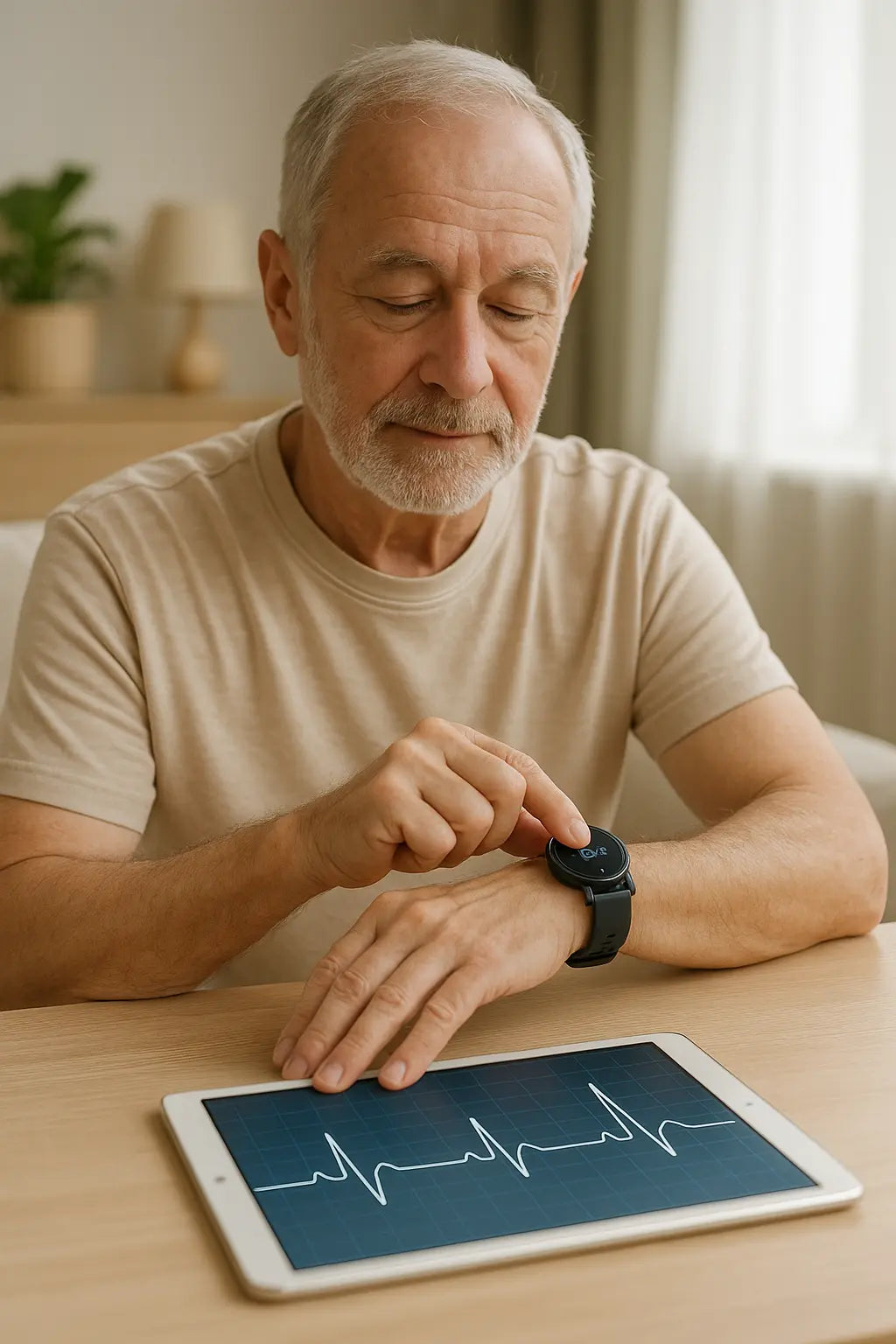

Why everyday health monitoring helps
In the past, you had to visit a doctor's office or laboratory to measure blood oxygen or perform a sleep analysis. Today, modern health watches are enough to record important body metrics around the clock. This can be a valuable form of daily support, especially for people aged 60 and over.
Which values are particularly informative?
- Pulse: Heart rate reveals a great deal about exertion, recovery, and circulatory stability.
- Sleep: A sleep analysis shows how long and how deeply we really sleep—important for energy and the immune system.
- SpO₂ (blood oxygen): Provides indicators for breathing quality, stress, and heart health.
What do the CARE Pro 4 Plus, CARE Air 3, and CARE One 2 offer?
- CARE Pro 4 Plus: Highly precise measurements of pulse, SpO₂, and sleep, with an additional ECG function. Ideal for people with a health risk profile.
- CARE Air 3: Simple and reliable monitoring of all three values. Automatic detection, clear display, and also suitable for beginners.
- CARE One 2: For those who prefer maximum simplicity: measures pulse and sleep quality—with no app required.
How can I use the data?
The watches store the measured values and display them in the app or directly on the screen. This allows you to detect changes in your daily life at an early stage and take countermeasures in the event of sleep problems, shortness of breath, or fatigue, for example—or consult a doctor.
Conclusion
A health watch cannot replace a doctor, but it helps you to take better care of yourself. Whether it’s the CARE Pro 4 Plus, CARE Air 3, or CARE One 2: all three models support you in understanding and actively monitoring your health.